
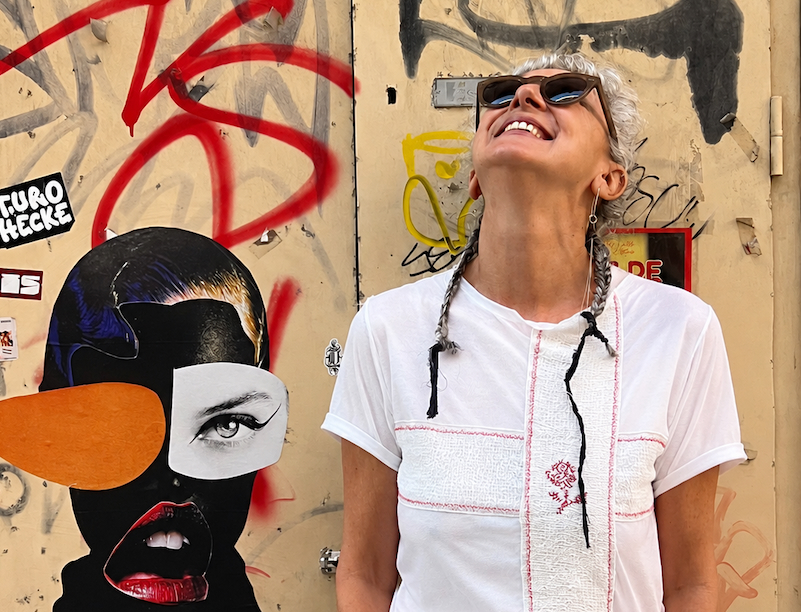
“Creating is instinctive for me…”
Paul Zimmerman in conversation with Catherine Lupis Thomas
Paul Zimmerman: How did you get interested in art?
Catherine Lupis Thomas: I don’t think I was interested in art. I was interested in looking.
I was born with huge brown eyes — “globular eyes,” as some kids at school kindly called them. My mother used to say that, even as a baby, I looked as if I wanted to eat the world with my eyes.
And maybe she was right. I looked at everything: people, faces, objects, streets, torn posters on walls. I could spend hours observing things without really knowing why they fascinated me.
Much later, I started photographing, collecting, cutting, assembling and transforming all those fragments.
So maybe art wasn’t something I discovered. It was simply the way I had been looking at the world all along.
PZ: What is the most challenging aspect of your work?
CLT: To talk about it.
Creating is instinctive for me. Explaining what I create is much more complicated. People often ask me what a collage means, and my first reaction is: I don’t know — ask my hands.
I often understand what I have done after I have done it. For years, people told me that I acted before thinking. It took me becoming an artist to understand that maybe doing is simply my way of thinking.
I once said to a friend: “I have nothing to say, only things to create.” And I think that still describes me pretty well.
PZ: What is your artistic process? How do you create your photographs and collages?
Sometimes my artistic process starts with cleaning my studio.
I might go into my studio determined to tidy everything up. But when I reach the floor, I end up on my knees among all the scraps of paper, examining every single one before I can bring myself to vacuum it away. What if there’s something worth saving? An eye, a word, a strange shape, a tiny piece of colour. And suddenly I’m not cleaning anymore. I’m making something.
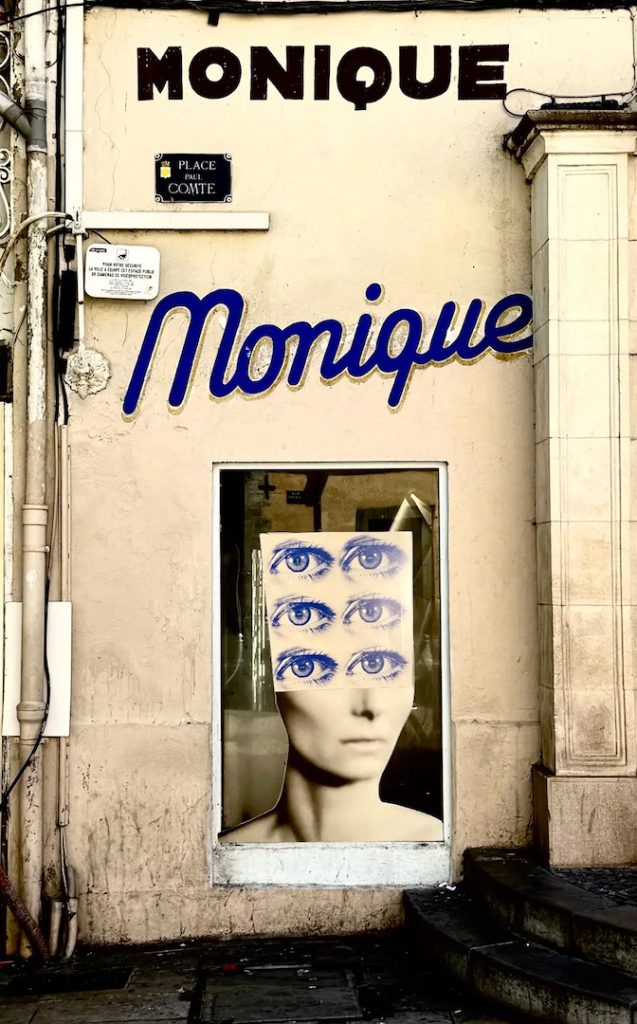
That’s quite typical of the way I work. I photograph constantly, I collect old magazines, images, torn posters and fragments that attract me without necessarily knowing why. Then I cut, move, assemble, tear, photograph again. I let my hands work.
When I work in the street, the process continues. The wall, a crack, an old poster, a piece of graffiti or something abandoned on the pavement can become part of the work. I don’t simply put a finished collage onto a wall. The street finishes the collage with me.
PZ: Do you have any particular goal in mind when you start a new piece?
CLT: Serendipity plays a huge part in my work.
I often start with an idea, but I never know what that idea might become. Last week I was cutting out a figure from a print I had prepared for New York and suddenly realised that what I was cutting could become a stencil. I don’t normally use spray paint, but I tried it. Then I isolated the legs and high heels, made a smaller stencil, and the next day I sprayed it in Marseille.
None of this was planned. One thing simply led to another.
I think that’s what I love most about creating: you have to leave enough space for serendipity.
PZ: How do you know when the work is finished?
CLT: When I can actually look at it with pleasure and no shame.
I know that sounds brutal, but it’s true. I can spend hours moving one tiny piece of paper, tearing something off, putting it back, changing everything. And then suddenly I look at it and I don’t feel the need to defend it, explain it or fix it anymore.
I can just look at it and think: THAT’S IT , AND I SIGN IT .
PZ: Has your practice changed over time?
CLT: The world evolves, and I look at it, live in it and work with it. So how could my practice stay fixed?
I don’t want to repeat myself just because something works. I want to remain curious, experiment with new materials, new techniques, new places.
If the world keeps moving, why shouldn’t I?
PZ: Which artists are you most influenced by?
CLT: I don’t really like dropping names. Although Jacques Villéglé is the artist who led me to create.
I think I’m influenced by everything — artists, filmmakers, writers, musicians, photography, streets, conversations. It’s all part of the same process, a fusion of words, images, sounds and ideas.
What interests me most is not who influences me, but what all this information nourishes in me and how I transform it into my own identity.
PZ: How would you define yourself as an artist?
CLT: Obsessed.
When something gets into my head, I have to follow it. I can spend hours looking, cutting, moving one tiny piece of paper, photographing, walking streets, searching for the right wall. I forget time, food, everything around me.
I don’t know if that’s the definition of an artist. But it’s definitely a definition of me.
PZ: What are you working on now?
CLT: 2027 will mark ten years since I started pasting in the streets.
I thought it would be a great moment to look back at those ten years and share how they changed me, my work and my philosophy.
So right now, among other things, I’m making a book.
I’m also preparing to open my own gallery-studio in Hyères, which feels like another new chapter.
PZ: What is the main message of your work?
CLT: FUCK IT… I AM FREE !